
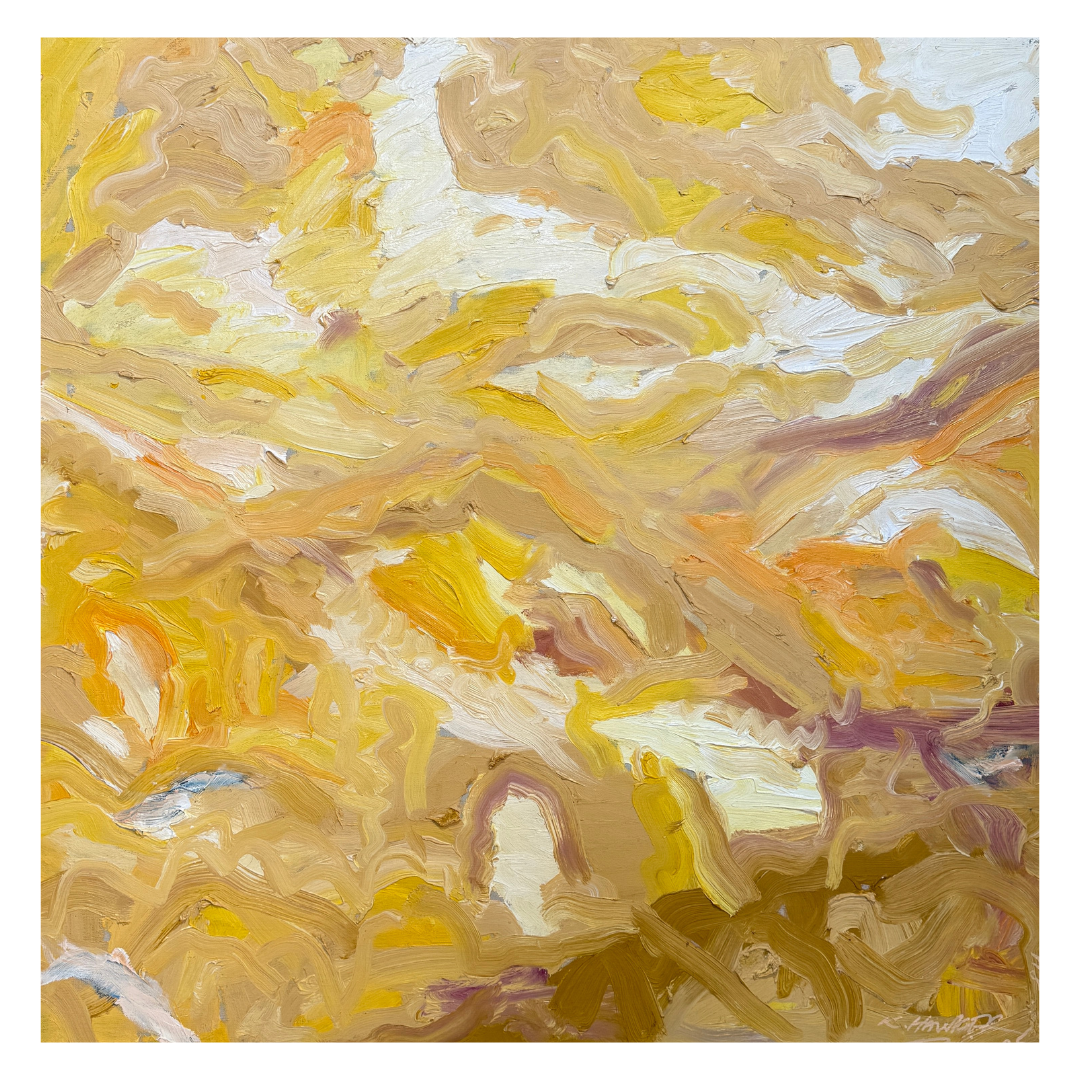
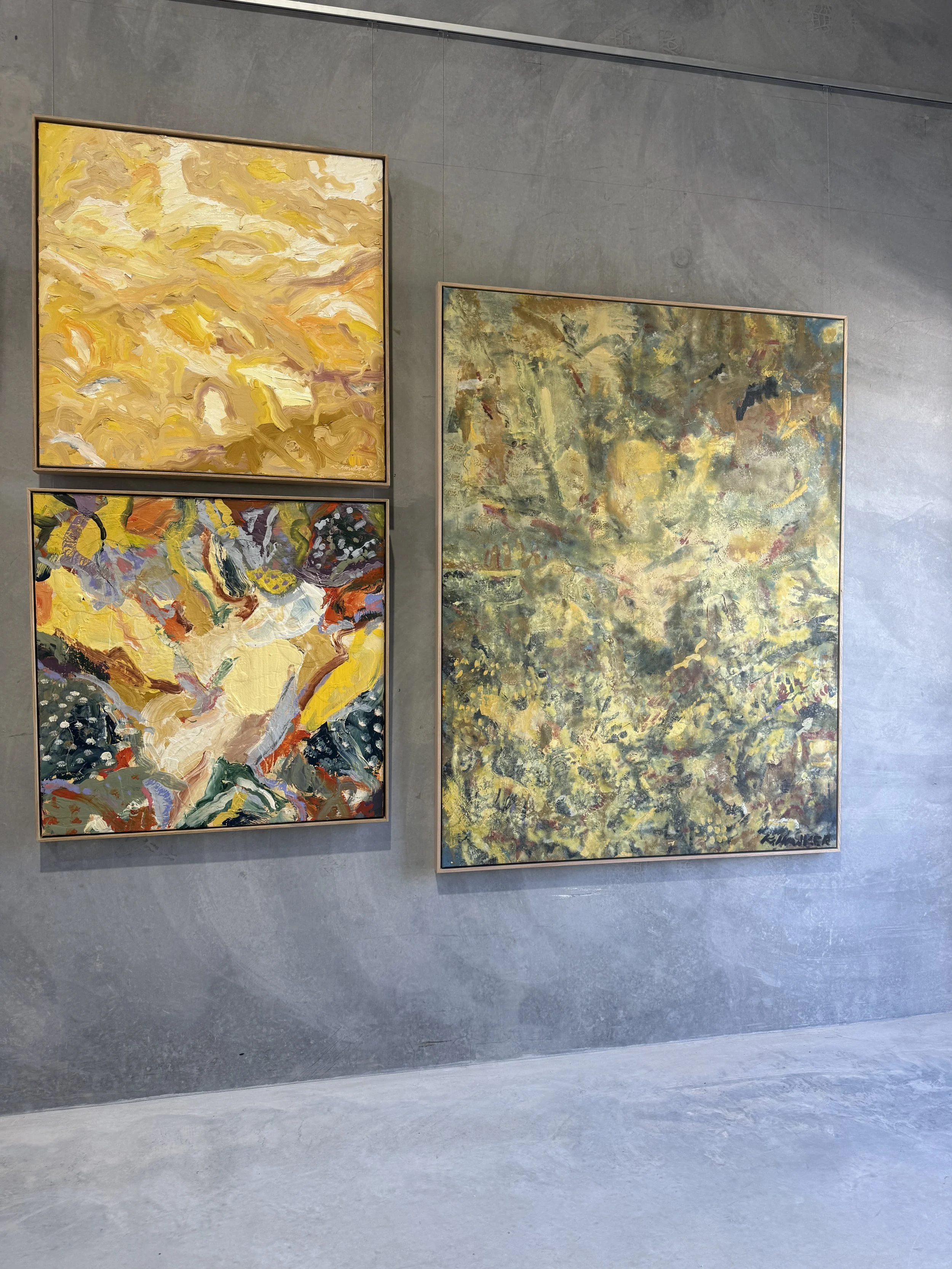
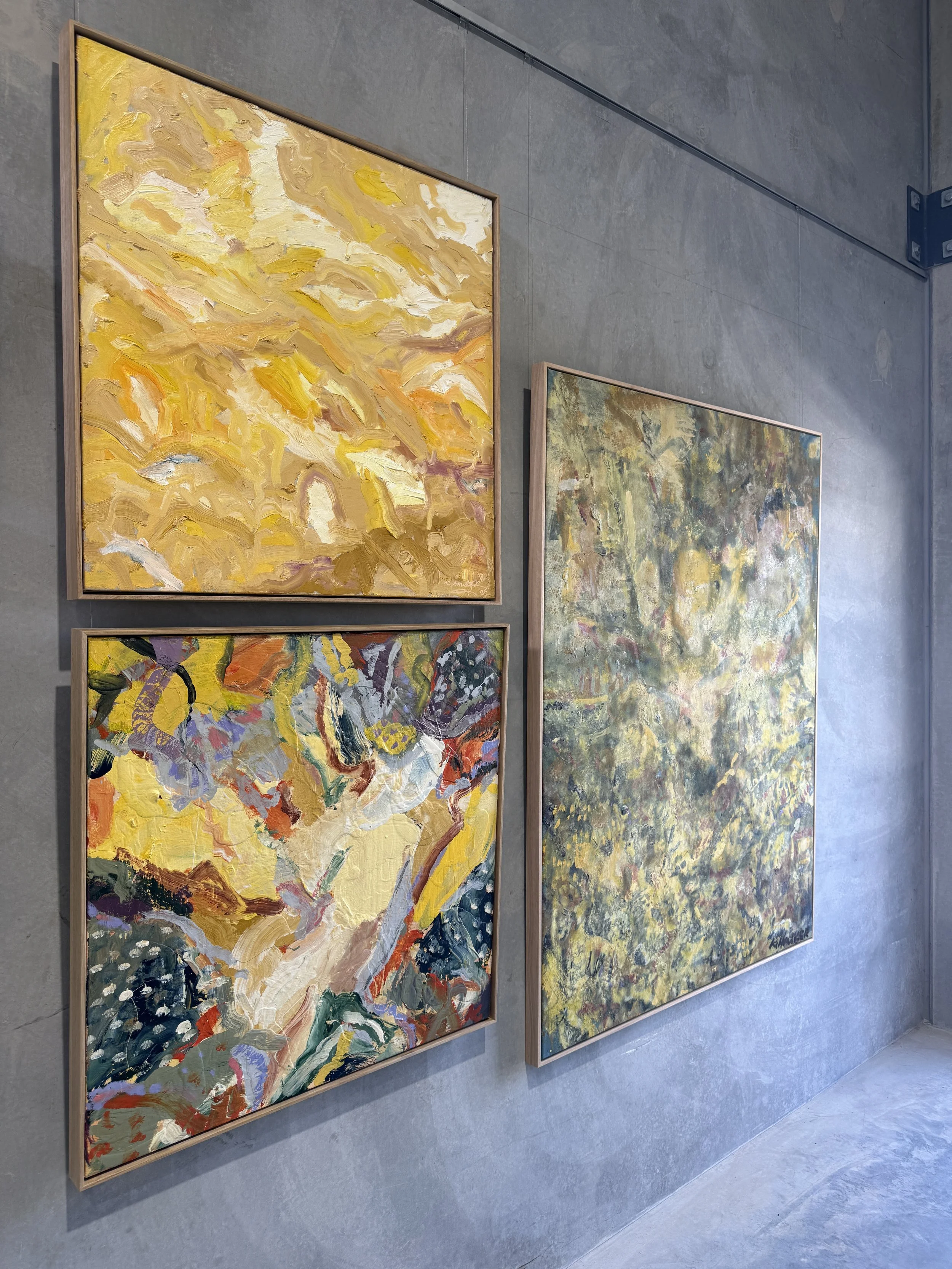
This is an original work by Kristian Hawker, as part of the ‘Between Salt and Light’ exhibition.
View additional works by Kristian Hawker here.
Artist CV is available on request.
Authenticity certificate is provided.
This work is in Noosaville, Queensland.
Freight is quoted and charged separately to the artwork purchase.
Please do get in touch if you have any questions or would like to view additional images of this work - we would be delighted to assist!
Kristian Hawker lives and works from an old houseboat on a quiet stretch of the Noosa River, on the Sunshine Coast in Queensland, Australia. Using the houseboat rooftop as his studio, his abstract works directly engage with the elements to form abstract landscapes and seascapes.
Hawker's paintings are inspired by aerial views of rugged Australian terrain. He works with a potent alchemy of acrylic, oil and saltwater on linen. This combination, along with natural forces — sunlight, rain, and wind — interacts with the materials over the course of months. Each work is a slow and poetic collaboration with nature; these elements are not only subjects, but also active participants in his process.
Hawker's past work as a potter and filmmaker further inform his works — "each work is a reflection of place, memory, and the continuous evolution of the place that we all call home."
About ‘‘Between Salt and Light’:
The ‘Between Salt and Light’ exhibition brings together three artists whose practices attend closely to line, surface, and elemental process. Across works on canvas and paper, the exhibition considers how natural forces - salt, water, light - act as both material and measure, shaping form through accumulation, erosion, and exposure.
The exhibition emphasises a shared sensitivity to process and duration. Rather than depicting landscape as image alone, the works register it as an active field: traced, marked, and altered over time. Lines appear as residues of movement and attention - drawn by sunlight, tide, crystallisation, shadows, and gesture - hovering between intention and chance. Photography operates not as documentation but as translation, extending material encounters into optical ones, while works on paper and originals honour touch and repetition. Together, the works invite close attention to subtle shifts in material, perception, and time.